





How 3D scanning and elevated printing are changing art and preservation
A recent PBS NewsHour segment sparked new discussion in the art and technology communities. In their CANVAS arts and culture series, the program explored how advanced 3D scanning is being used to examine, document and recreate classic works of art with extraordinary accuracy. The story raises an important question:
How should we think about authenticity when a reproduction can capture every brushstroke, crack and detail of the original surface?
The rise of high fidelity art scanning
Companies such as Arius Technology are scanning artworks at a resolution of 10 microns. This is thinner than a tenth of a human hair. The process reveals cracks, age-related warping and the exact micro-topography of a painting or fresco. These scans are becoming essential tools for preservation, restoration and documentation. Cultural institutions use them to protect work from environmental risks, natural disasters and the inevitable effects of time.
The same technology also enables extremely accurate reproductions. In the PBS report, one expert noted that most people would not be able to distinguish a high-quality reproduction from the original unless they were told in advance.
The debate about authenticity and experience
Art historians in the segment raised concerns that widespread access to near-perfect copies might diminish the cultural or financial value of originals. Others welcome the idea of giving broader audiences access to masterpieces that many people will never be able to see in person.
There is also the question of experience. Walter Benjamin once argued that a true copy can never reproduce the original’s time, place and presence. Standing in front of an original remains a singular moment. At the same time, accessible and tactile reproductions open doors for education and inclusion that museums have struggled to create for centuries.
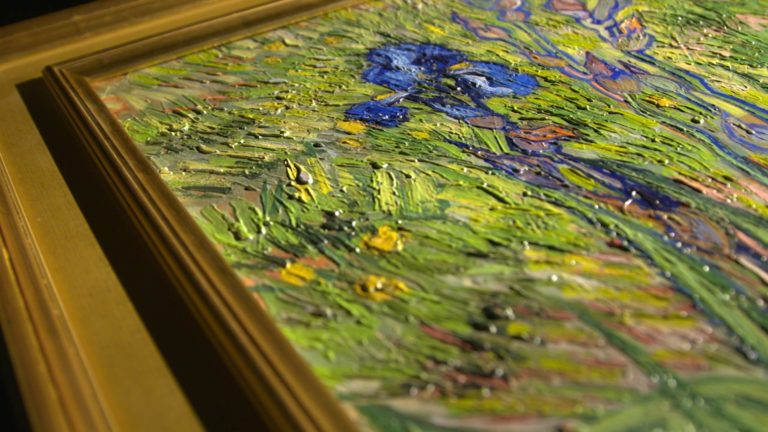
Surface texture detail of Van Gogh’s Iris reproduction by Arius, Canon, and the National Gallery of Canada. / ©Arius Technology
Where Canon Arizona technology fits in
The PBS segment focused mainly on scanning. The other half of the story is what happens after a digital scan is created. Canon’s Arizona flatbed printers with elevated printing technology are already making these conversations practical, not theoretical.
Elevated printing makes it possible to create:
- Detailed reproductions with the texture of real brushstrokes
- Tactile artworks for people with visual impairments
- Museum-grade replicas for exhibitions, storage and research
- Creative reinterpretations that use texture as a design element
The combination of high-resolution scanning and elevated printing turns digital data into physical, touchable experiences. It expands what museums, archives, designers and educators can do with artwork, both historical and contemporary.
A future where originals and experiences coexist
The PBS story ends by acknowledging that nothing replaces the moment of standing in front of an original masterpiece. At the same time, high-quality textured reproductions can help preserve fragile works and share them with audiences who otherwise would never encounter them.
Canon’s elevated printing technology contributes directly to this future. It supports preservation, expands access and inspires new forms of creativity. The conversation about replicas, authenticity and experience is only beginning, and our industry is helping shape what it becomes.
Watch the full PBS segment here:
3D scanning technology is being used to examine and replicate classic works of art